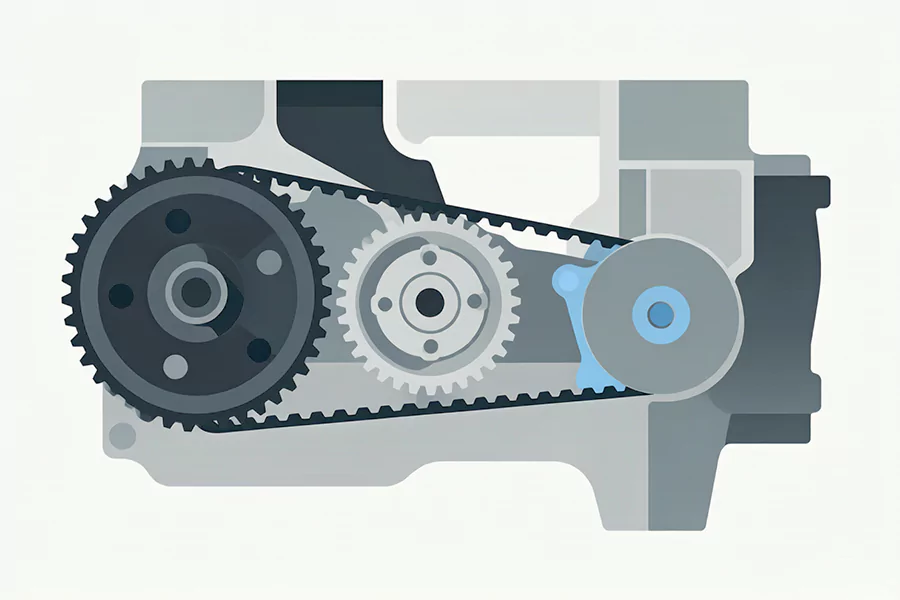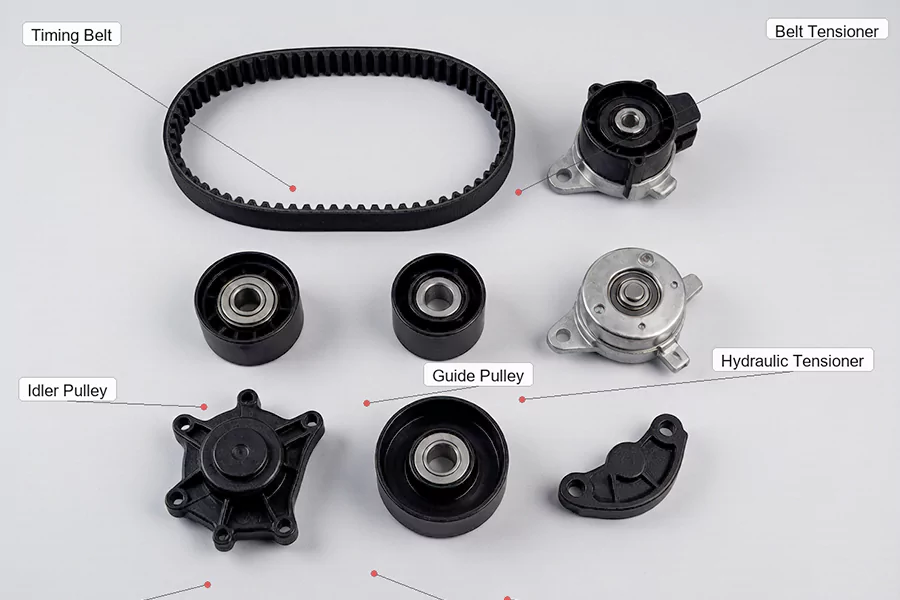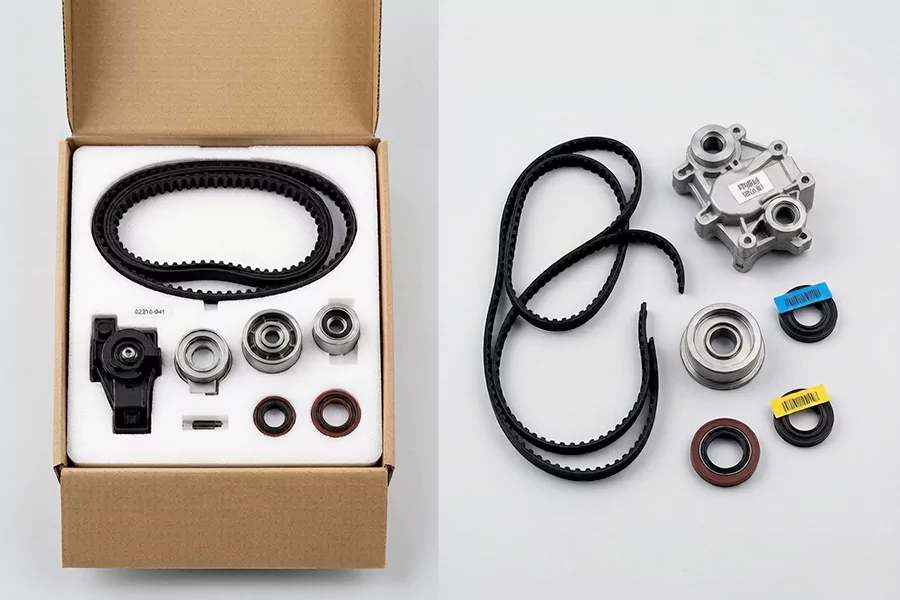
Timing systems don’t usually fail without warning. They give you weeks, sometimes months, of hints before the belt or chain actually lets go.
If you’re in the parts game, catching those hints early is what separates a routine job from a comeback you didn’t ask for. A ticking noise. A rough idle. Power that drops off. Any of it can mean the belt, chain, tensioner, or guides are wearing out.
The timing system keeps the crank and cam in step. When the belt or chain drifts, the engine loses efficiency and the damage builds where you can’t see it. Spot the common engine timing problems early and you’ll sell the right fix and the right engine timing repair kit instead of guessing.
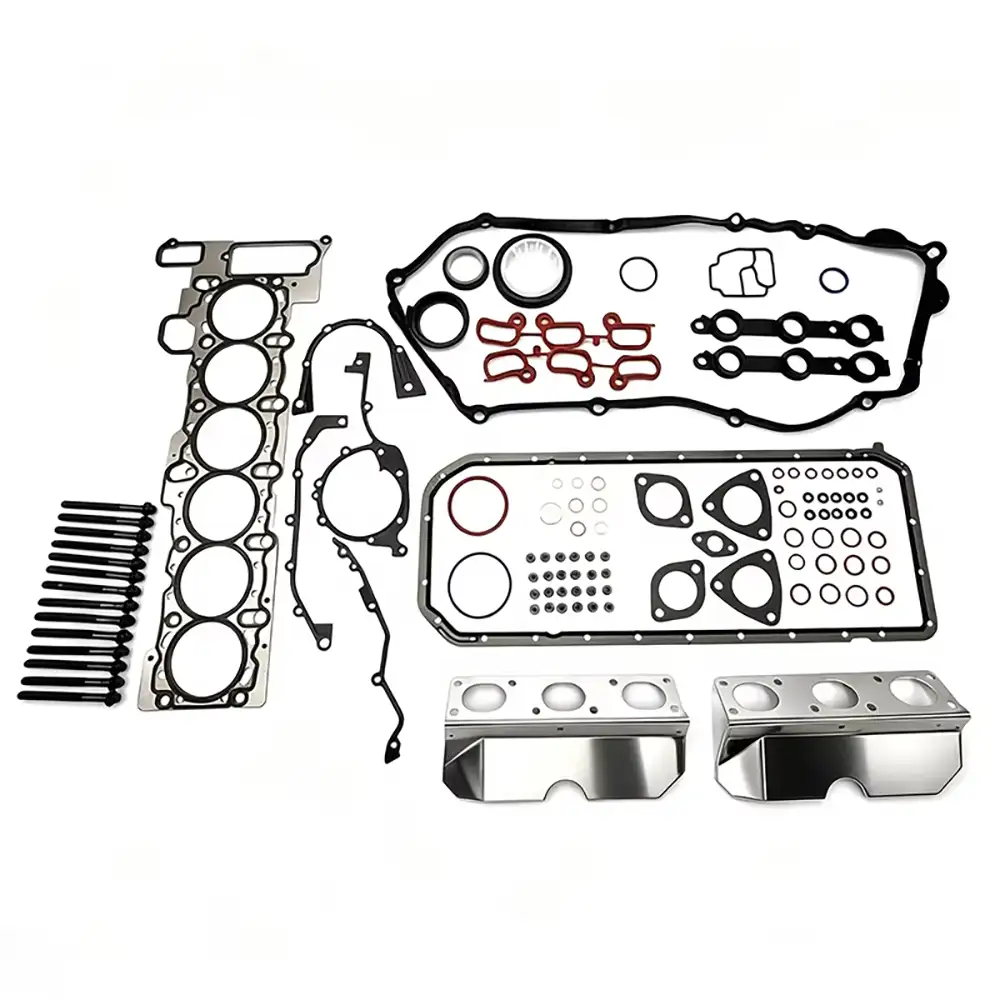
1. Noise coming from the engine
Customers don’t bring the car in because they read a checklist. They bring it in because something sounds wrong.
On the chain side, that’s usually a rattle, worst when the engine’s cold. The tensioner’s lost its pressure or the guides have worn through, and the chain slaps. Belt engines stay quieter about it. The belt itself won’t make much noise, but a pulley bearing going bad, a tensioner on its way out, or an idler that’s starting to seize will.
Don’t just pull the one part that’s making the noise and call it fixed. Everything in that front end runs off everything else. Miss the real cause and the customer’s back in two weeks. Pull the cover and look at the whole assembly before you quote it.
2. Bad timing chain symptoms: misfires and lost power
When the chain stretches or the tensioner lets go, valve timing drifts off the mark. You’ll feel it more than hear it.
On the lift it shows up as misfires, often only when you’re into the throttle. Power falls off the higher you rev. Acceleration goes flat. The fuel numbers drift down. And the idle turns rough in a way it wasn’t last season.
People chase coils and injectors first. Timing’s further down that list, and that’s the mistake. Put it on the list before you start swapping parts.
Belt engines do the same thing a different way: the belt jumps a tooth when the tensioner’s worn, and the whole engine timing goes off a notch.
3. Hard starting, or no start at all
A car that cranks but won’t catch has a long list of possible causes. Timing’s one of them.
Let the belt wear past its limit or the chain stretch far enough and the crank and cam stop agreeing. Worst case, the valves aren’t opening when they should and it won’t fire at all. On anything with real miles on it, checking the timing during diagnosis saves you a no-start breakdown later.
4. The check engine light
The ECU watches timing through the crank and cam sensors. Drift enough and the light comes on.
What sets it off:
- Cam position reading out of range
- Crank timing off
- Chain stretch the computer caught
- Tensioner losing its grip
- Any sensor saying the timing’s wrong
The scan tool tells you which way to look. It doesn’t tell you what’s actually broken. That still takes your eyes on the parts.
5. Oil where it shouldn’t be
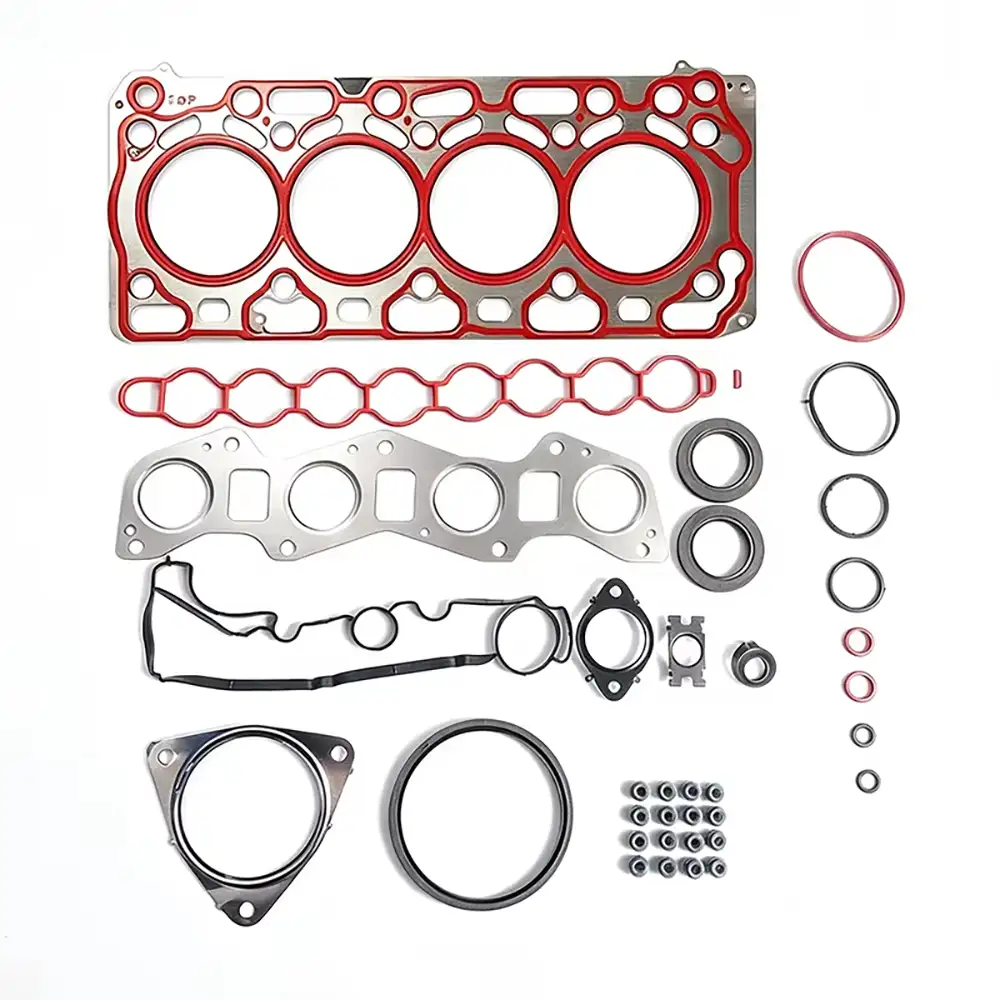
Easy to ignore a little leak at the timing cover. Don’t.
Worn seals push oil into the timing area. On a belt engine that gets on the belt and chews the rubber early. On a chain engine, thin or dirty oil starves the guides and tensioner and the rest wears out ahead of schedule.
You’re already in there for one part. Check the seals and what’s around them while you’ve got it open. Cheaper than doing it twice.
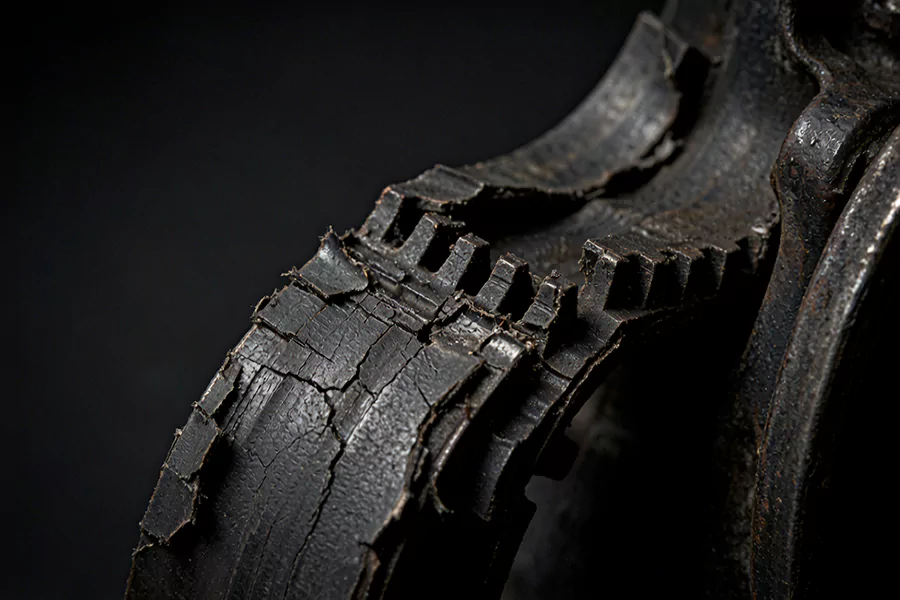
Timing belt failure symptoms vs bad timing chain symptoms
Same job, different ways to fail.
A belt is a scheduled item. The rubber hardens and cracks on a clock, whether the car is driven or parked. A chain is built to last longer, but it stretches, its guides wear, and a weak tensioner lets it slap.
| What fails first | |
|---|---|
| Timing belt | Cracks, worn teeth, tensioner failure, pulley bearings |
| Timing chain | Stretch, guide wear, tensioner trouble, cold-start rattle |
Get the pattern right and you’ll point the customer to the correct timing belt repair kit or engine timing repair kit instead of the wrong box.
Why we sell the full kit, not the single part
When something in the timing system wears, replacing just that one piece leaves the rest of the assembly on borrowed time. A new belt on an old tensioner is a comeback waiting to happen.
That’s why the full kit is the move:
- Belt or chain kits
- Timing belt water pump kits
- Complete engine timing repair kits
Everything in the box is matched to one engine. The shop does the job once. The distributor carries fewer mismatched SKUs. The customer doesn’t come back angry.
Picking a supplier who won’t sink the sale
Technical accuracy matters as much as price when you’re buying timing parts to resell.
A supplier worth your shelf should hand you:
- Fitment data that’s actually correct
- OE reference numbers that match
- Parts that are consistent batch to batch
- Kits that are complete, not missing the little bolts
- Supply that doesn’t disappear mid-season
One wrong application number is a return and a complaint. For an international distributor moving hundreds of models, the catalog is the product. Get it wrong and the rest doesn’t matter.
GELWERK: timing parts built around the engine, not the box
GELWERK supplies aftermarket timing components to distributors, wholesalers, and repair shops worldwide. The range covers timing system parts, bearings, and other engine internals, built to match specific vehicle applications.
They keep a fitment database and run checks on what ships, because a timing kit is only as good as the application data behind it. Whether you need a timing belt repair kit, a timing chain kit, or a full engine timing repair kit, the point is the same: every part has to fit the engine it’s sold for, or the box is worthless.