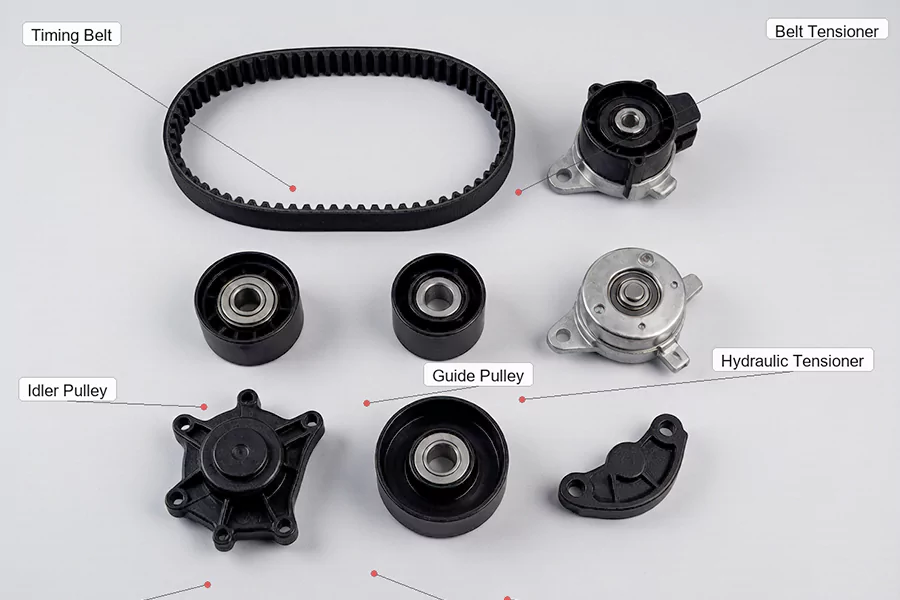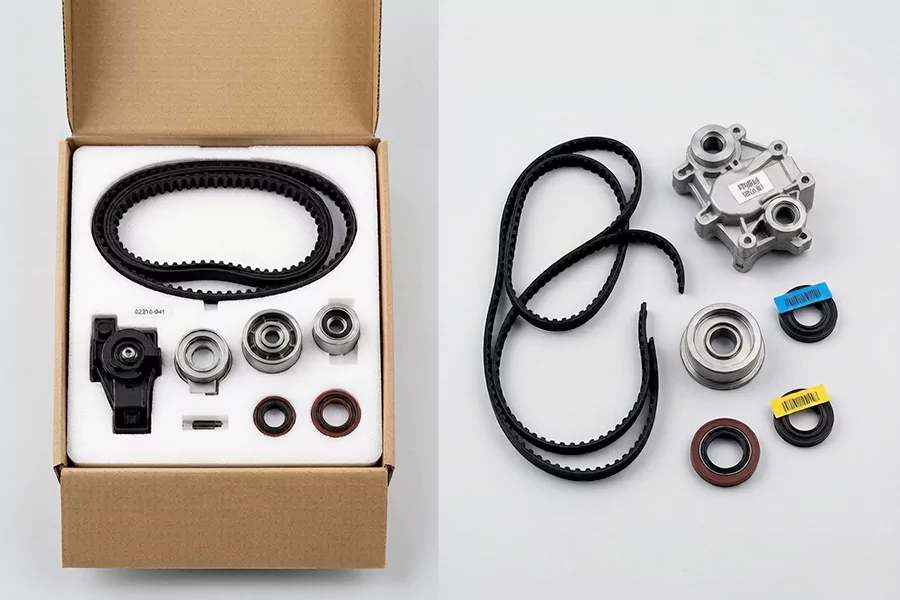
A spun bearing wrecks an engine. Everyone in the trade knows that. What fewer people talk about is that it rarely happens out of nowhere. Bearings wear in stages, and catching the signs early is the difference between a bearing kit and a block.
If you build engines or sell rebuild parts, the bearing kit has to be right on three counts: the journal size, the material, and the application. Wrong on any one and the engine’s coming back apart.
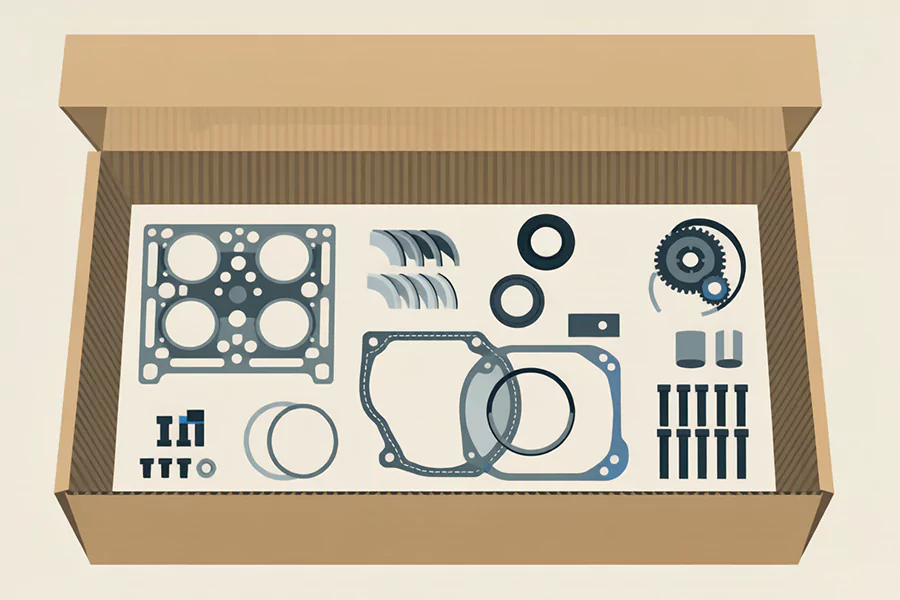
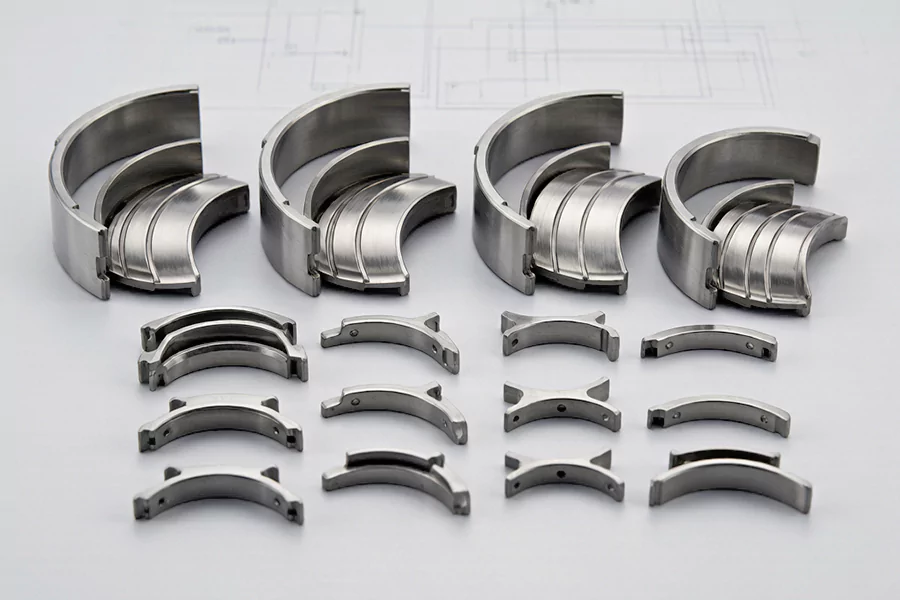
A complete engine bearing kit isn’t just a set of shell halves in a box. Every bearing has to match the journal diameter, the oil clearance, and the load that particular engine puts on it.
What bearings actually do
Main bearings sit between the crank and the block. Connecting rod bearings sit between the rods and the crank journal. Their job is simple: let those parts spin without touching each other.
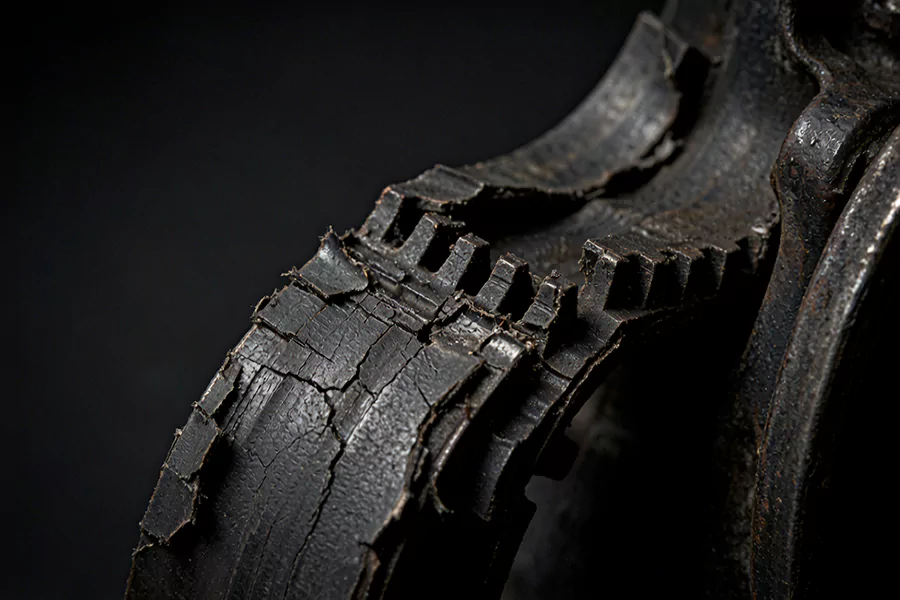
They do it by holding a film of oil between the bearing surface and the journal. That oil film is what keeps metal off metal. When the clearance opens up from wear, the oil pressure drops and the film breaks down. At that point the bearing starts eating itself.
What you’ll catch if you’re looking:
- A low-end knock that gets worse under load
- Oil pressure dropping off
- Metal in the oil or the filter
- A crank journal that’s scored
Every builder checks bearings during a tear-down. You measure the clearance, look at the wear pattern, and decide whether it’s a simple bearing swap or the crank needs to go to the machine shop. Miss that step and the rebuild doesn’t last.
Main bearing kits
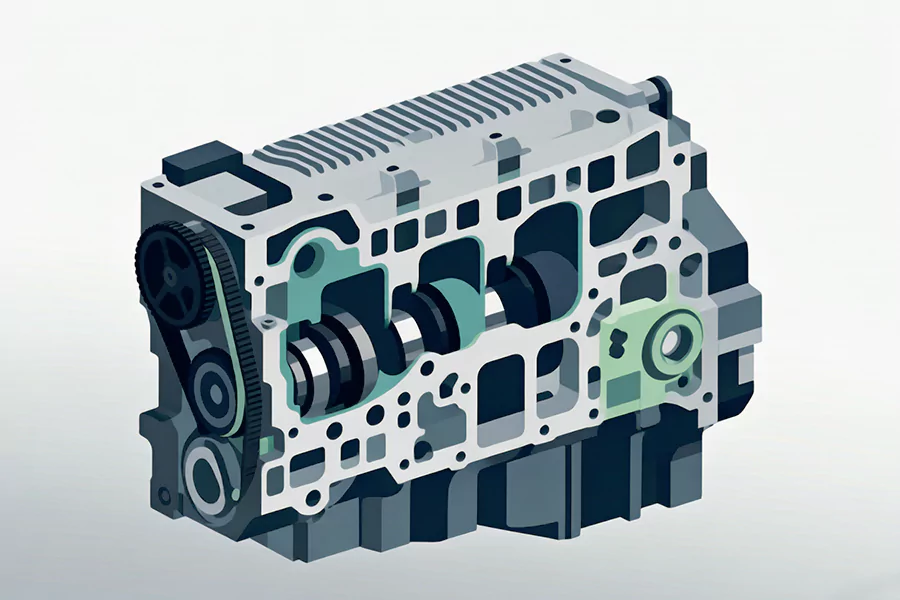
The main bearings hold the crankshaft in the block. They sit in the main bearing saddles and carry the crank’s full rotating load.
During an overhaul you pull the mains and check:
- Wear pattern across the bearing face
- Scoring or embedded debris
- Clearance. Measured with Plastigage or a bore gauge and mic.
- Signs of oil starvation
A main bearing kit has to match the crank journal diameter and the block’s main bore. Not close. Exact. Standard size, or whichever undersize the crank was ground to.
Connecting rod bearings
Rod bearings live between the big end of the connecting rod and the crank journal. They take the combustion load. Every power stroke hammers down through the rod onto that bearing shell.
A connecting rod bearing fails hard. The classic sign is a knock that follows engine speed. By the time you hear it the bearing is usually gone and the crank journal might need work.
For the guy on the bench, the connecting rod bearing set has to match the crank pin diameter and the rod’s big-end bore. Same as mains: standard or undersize, and the clearance has to be within spec or it won’t hold oil pressure.
Thrust bearings and what they control
The thrust bearing keeps the crank from walking forward and back. It’s usually built into one of the main bearing positions.
It doesn’t get talked about as much as mains and rods, but if the thrust surface wears out, the crank moves axially and the whole bottom end geometry goes off. Check it during tear-down.
Why you buy the full kit, not single shells
When one bearing is worn enough to knock, the others aren’t far behind. Oil carries debris through the whole engine. If one bearing looks bad, the rest have been running in the same contaminated oil.
A complete engine bearing kit makes sense because:
- Every shell is sized for the same engine and the same undersize grind
- You’re not mixing brands or batches with slightly different clearances
- The job goes faster. No waiting on one back-ordered bearing shell
For the distributor, bearing kits are also cleaner to stock than individual shell halves. One kit per engine code instead of tracking every main and rod shell separately.
What to check before you order
Bearings are not one-size-fits-most. Ordering the wrong set means the shells won’t fit the journals and the engine won’t hold oil pressure.
Before you buy, lock down:
Vehicle. Engine code. Engine displacement. Year. Crank journal sizes. Standard or undersize. The undersize spec if the crank’s been ground.
A supplier who can’t hand you the exact engine code and bearing dimensions isn’t worth your shelf.
Material and quality
The trade keeps moving toward complete solutions, and not because of fashion. Shops want less guesswork on tBearing shells look simple but the engineering isn’t. The material has to survive heat cycles, high loads, and borderline oil conditions.
Three things that separate good bearing kits from the ones that fail early:
- The bearing alloy itself. Different engines use different materials depending on load and expected service life.
- The surface finish. Overlay and coating matter for break-in and embeddability.
- Dimensional accuracy. A bearing that’s off a thou changes oil clearance.
Ask about the material spec. If the supplier can’t tell you what’s in it, that’s a red flag.
Oversize and undersize
This is basic but people still get it wrong. When a crank journal wears, the machine shop grinds it to the next undersize. The bearing shells then need to match that undersize, not the original standard.
A good bearing kit comes in standard, 0.25 mm, 0.50 mm, and sometimes 0.75 mm undersize. If your supplier only stocks one size, they’re not serving engine builders.
Engine bearing kit supplier: what matters
For a wholesaler or distributor, the bearing supplier is a relationship, not a catalogue entry.
Things worth checking:
- How many engine codes do they actually cover?
- Can they supply undersizes across the range?
- Are the batches consistent?
- Packaging and labeling: can your warehouse staff identify the right shells at a glance?
- If you ship internationally, do they handle export properly?
Bearing kits are high-stakes parts. The customer only finds out something’s wrong when the engine is already together and the oil pressure doesn’t build. Get the application right or don’t ship.
Why rebuild parts keep moving
Engines fail. People rebuild them instead of swapping in a new engine because the numbers usually work out cheaper. That keeps demand for bearing kits, gasket sets, timing parts, pistons, and rings steady year after year.
For a distributor, having one supplier who covers the full range means less chasing and fewer gaps in your catalogue.
GELWERK: engine bearing kits built around the application
GELWERK supplies engine bearings to distributors, wholesalers, and rebuild shops across global markets. The range covers main bearing kits, connecting rod bearings, and other engine internals matched to specific engine codes and applications.
They keep a fitment database and check what ships because a bearing kit that’s off by a thousandth is a comeback nobody wants. Whether the job calls for a standard engine bearing kit or an undersize set, the same rule holds: every shell has to fit the journal it’s going on, or the box is useless.