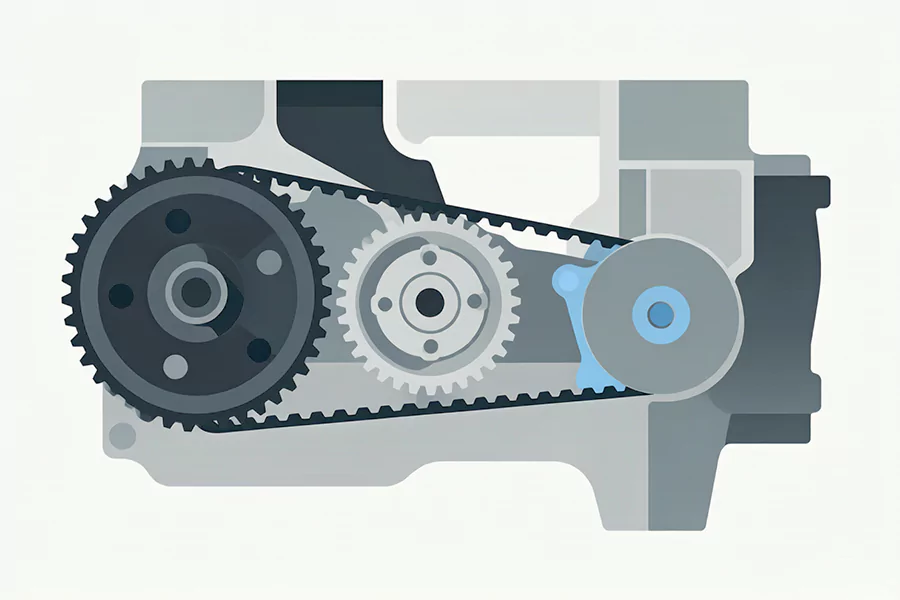
An engine only runs when the cam and crank stay in time. A belt keeps them there, or a chain does. The engine doesn’t care which. You should, because they wear differently and they cost you different amounts of shop time when they let go.
You’re in the parts business, so this isn’t theory. Belt kits and chain kits sit in the same spot on your shelf and look like they cover the same job. They don’t. Service life is different. So is how they fail, and what a mechanic charges to fit them. Get it wrong and a customer’s engine comes back on a trailer.
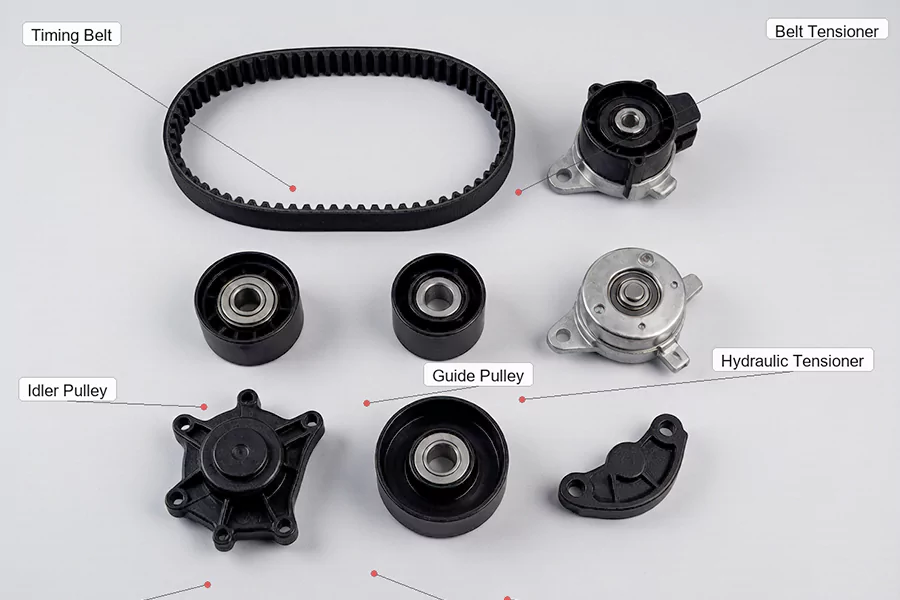
A timing belt kit puts everything for a belt-driven rebuild in one box. The belt is rubber with teeth that grab the cam and crank sprockets. What’s inside varies by engine, but you’ll usually get the belt, a tensioner, idler and guide pulleys, and on some applications a hydraulic tensioner. A few engines bundle the water pump into the kit, and there are always the seals and little bolts nobody notices until one’s missing.
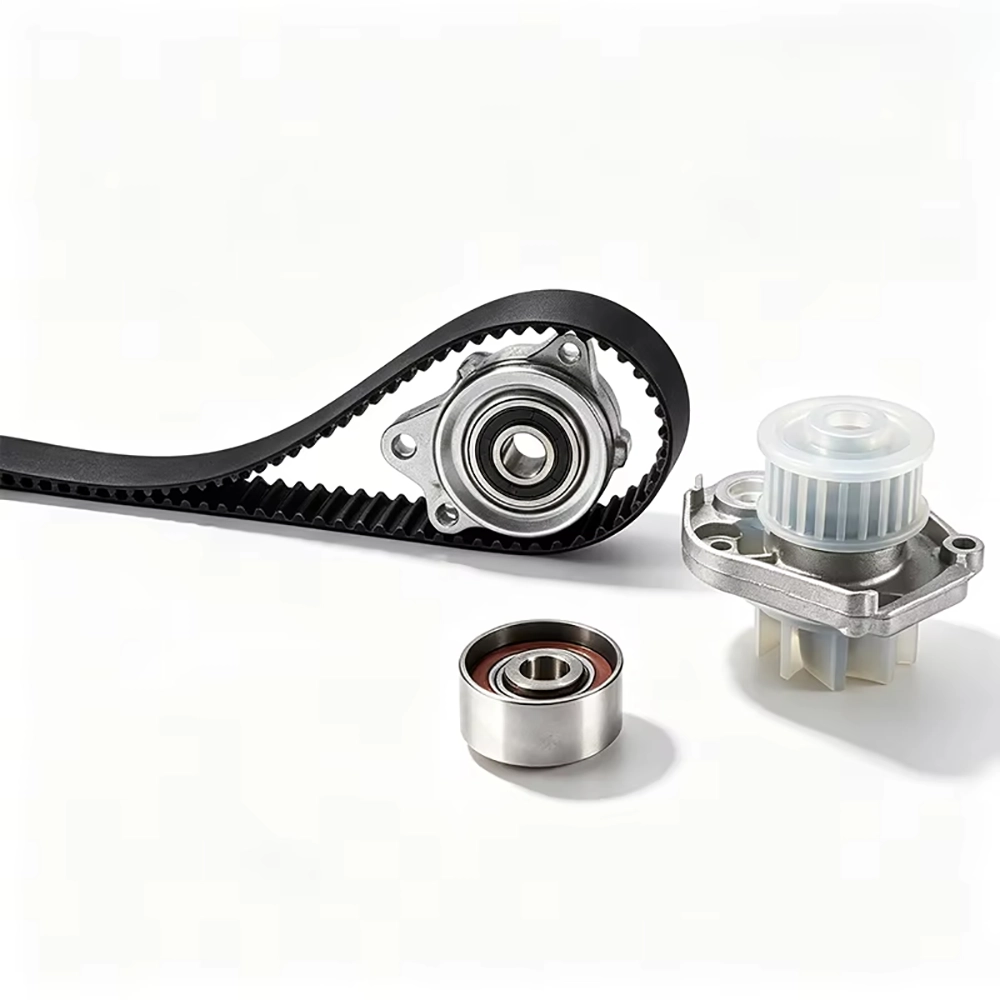
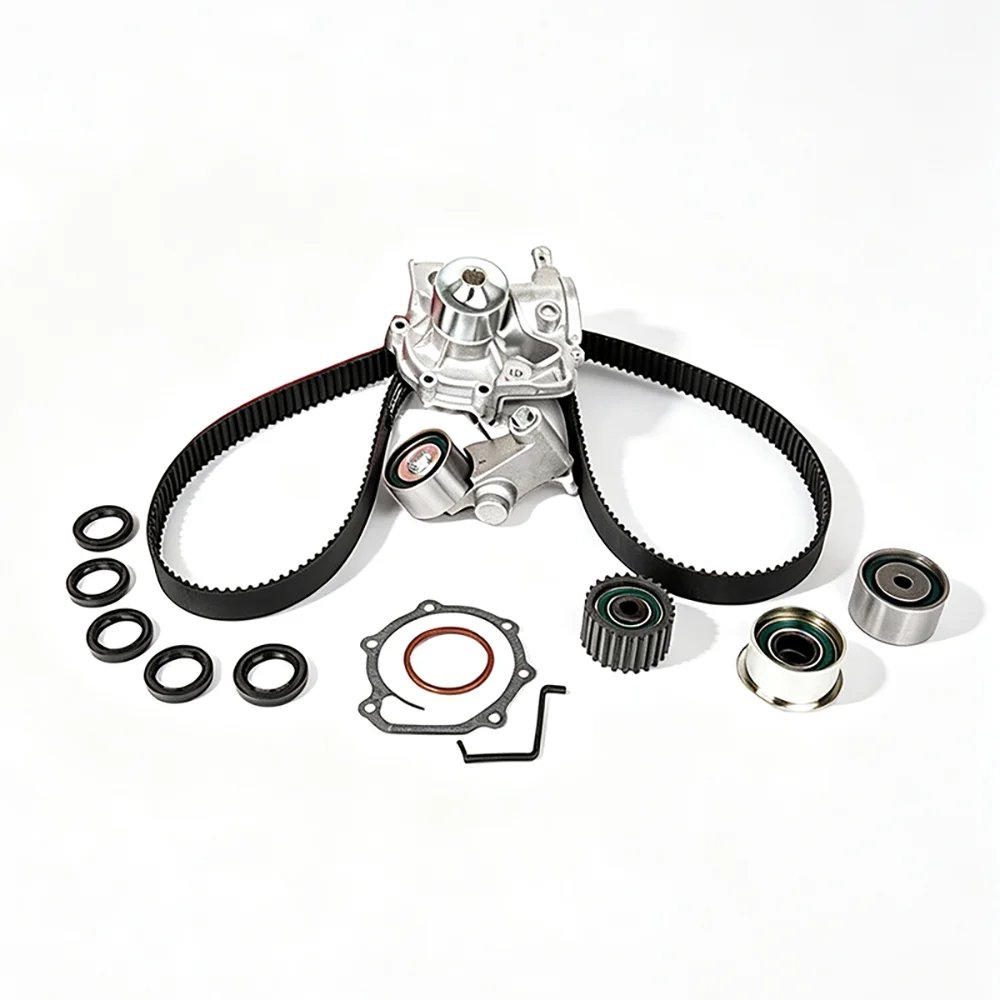
One thing we tell every counter: don’t sell the belt by itself and leave the old tensioners in the engine. They’ve aged as a set, and a tired tensioner wrecks a new belt faster than the belt would ever wear out on its own.
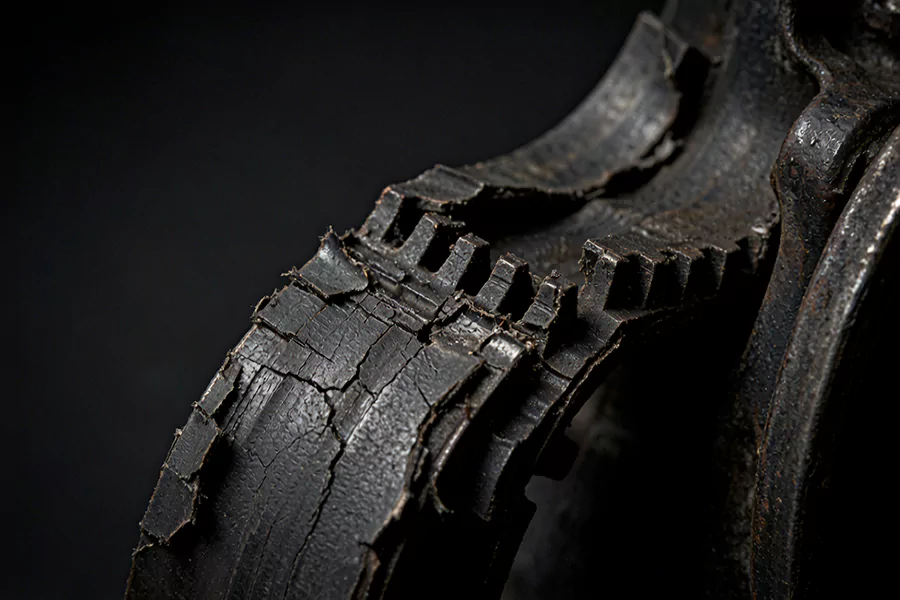
Manufacturers put belt changes on a mileage schedule for a reason. Rubber hardens and cracks whether the car is driven or parked. Miss the interval and it lets go. On an interference engine that means valves hitting pistons, and usually a wrecked engine.
What’s in a timing chain kit?
A timing chain is a metal chain running in engine oil, moving between the crank and cam sprockets. Chains last longer than belts by design, but they are not set-and-forget.
A chain kit usually comes with the chain, the tensioner, the guide rails, the sprockets, and assorted hardware. Chains stretch. Guides wear. Tensioners get lazy. None of it happens fast, but it happens. The usual warnings are a rattle on cold start, misfires, a drop in power, and a timing-related warning light. When you see those, replace the whole kit instead of chasing one worn part. It’s cheaper than doing the job twice.
Belt or chain: the real differences
It mostly comes down to what they’re made of, how they’re serviced, how loud they are, and how long they last.
| Timing belt | Timing chain | |
|---|---|---|
| Material | Reinforced rubber | Metal chain |
| Operating condition | Runs dry | Runs in oil |
| Noise | Quieter | Louder |
| Replacement | Fixed interval | Longer life |
| Main wear parts | Belt, tensioner, pulleys | Chain, guides, tensioner |
Why a manufacturer picks one over the other is their problem. Engine layout, weight, cost, and performance targets all factor in. For the rest of us the question isn’t “belt or chain.” It’s “which kit fits this engine and won’t come back in six months.”
Why buy the full kit instead of piece by piece?
The timing system is only as strong as its weakest part. A worn guide or a soft tensioner will take the whole thing down even if the belt or chain looks fine.
Buying the complete kit saves you a few ways. Everything is matched to the same engine, so you’re not mixing parts from three suppliers. You replace it all once instead of opening the engine again next year. And if you stock parts, carrying kits is simpler than tracking every pulley and seal separately.
For wholesalers, one kit from one supplier beats juggling a dozen individual SKUs. Less ordering, fewer mismatches, faster turnaround.
Picking a supplier
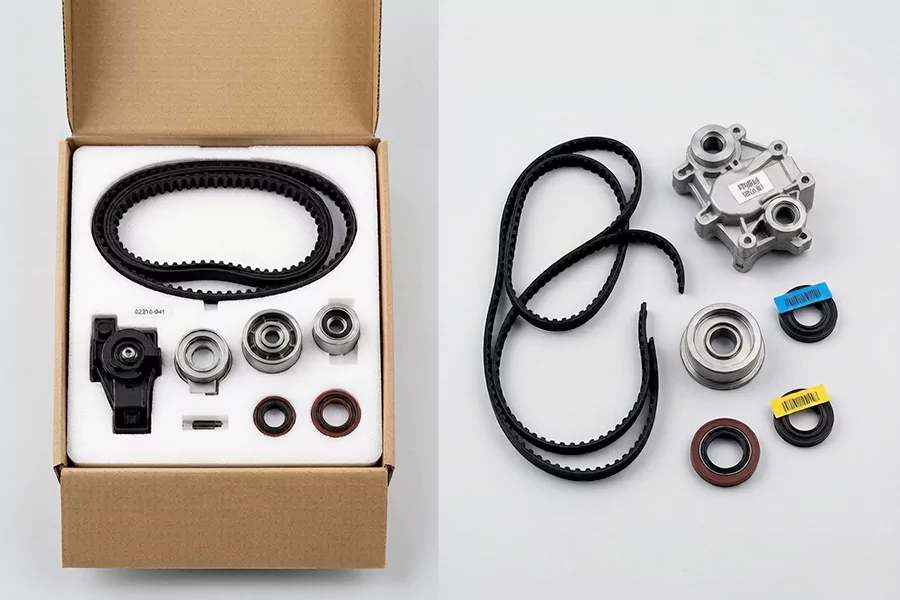
Price is the obvious number, but it’s the wrong one to fixate on. A few things matter more when you’re buying for resale: does the catalog actually cover the models you sell, are the OE reference numbers listed and correct, what are the parts actually made of, is there any real quality control or just hope, does the packaging survive shipping, and can they keep you supplied.
If you move hundreds of part numbers, the supplier’s accuracy matters more than their discount. One wrong application number is a return, a complaint, and a customer you may not get back.
GELWERK and what they make
GELWERK has been in the aftermarket engine parts business for a while, building its catalog around timing components, bearings, and other engine internals. They keep a vehicle-coverage database and run checks on what they ship.
If you need a belt kit, a chain kit, or a full engine repair kit, they’re set up to supply distributors and repair shops rather than one-off retail. That’s the kind of operation that lives or dies on getting the application right, so the catalog is where they put their effort.