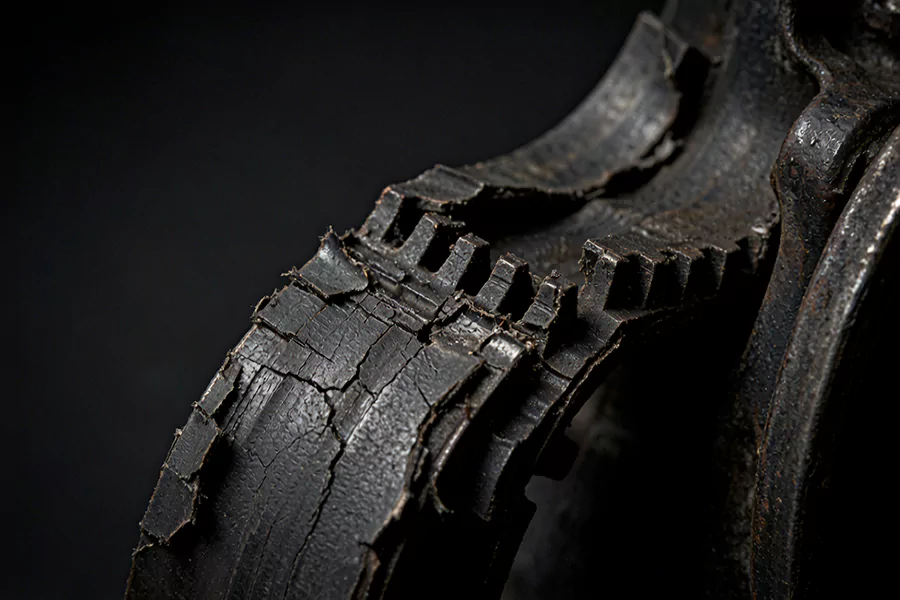
When a car hits its timing belt interval, the question isn’t really “belt or no belt.” It’s whether to open the front of the engine and walk away leaving the old water pump ticking. On most engines where the pump runs off the belt, the answer is to do both — which is exactly why shops replace the water pump with the timing belt in one job. That’s the whole idea behind a timing belt water pump kit, and it’s why they sell so well in the aftermarket.
Treat the timing system and cooling system as one job instead of two, and you stop calling the customer back. For shops, distributors, and anyone buying engine parts, understanding how the belt and pump relate makes kit selection a lot easier.
How the timing belt and water pump actually connect
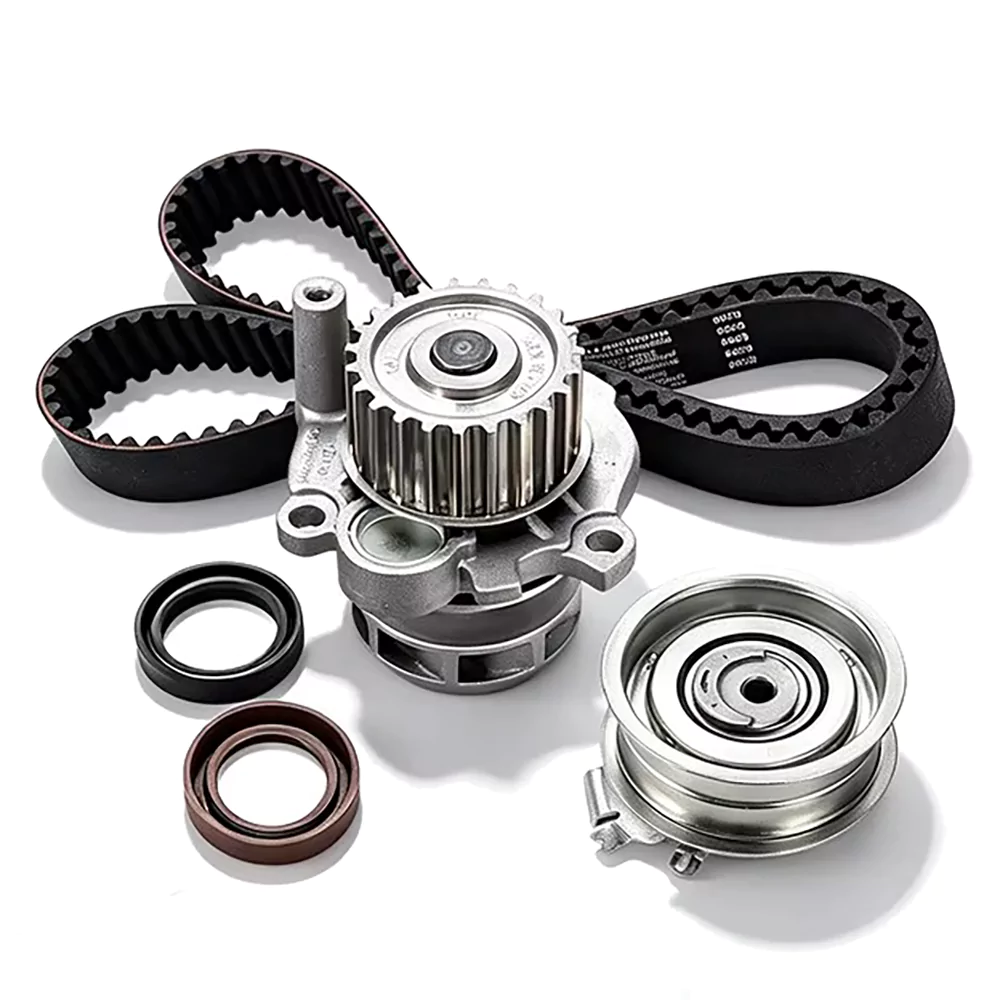
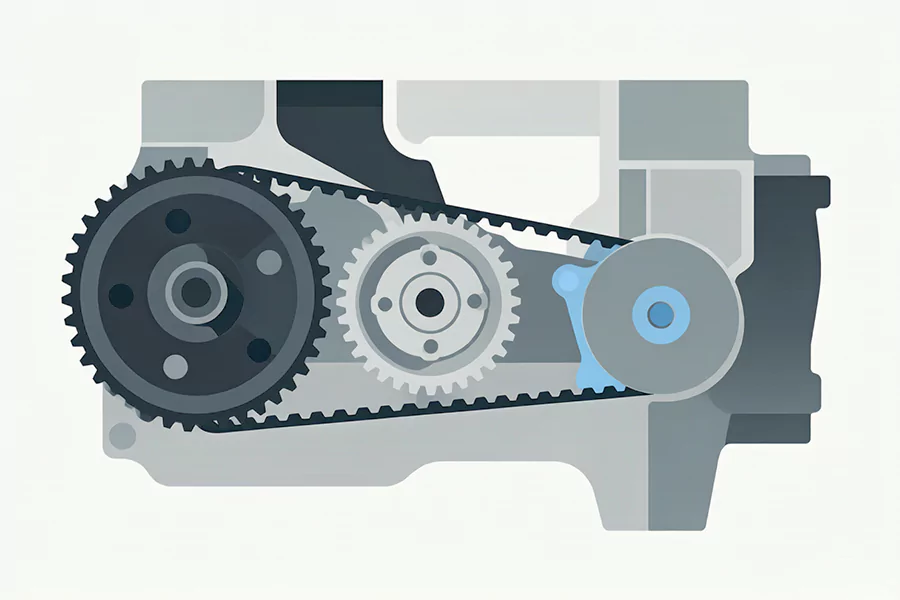
They do different jobs but live in the same space. The belt keeps the crank and cam in sync so the valves hit at the right moment. The pump pushes coolant so the engine doesn’t cook. On a lot of engines the belt is what turns the pump.
That matters because both parts sit in the same heat, see the same hours, and wear on roughly the same clock. By the time the belt is due, the pump has usually been through just as much. Leave it and you’ve got a second teardown lined up a few months out.
Why replace the water pump with the timing belt?
Most techs do it for three plain reasons, and none of them are theoretical.
The intervals line up. A belt is a scheduled item — mileage, age, or whatever the manufacturer says. The pump doesn’t always share that exact interval, but its life usually runs out around the same time. Do both and you’re not paying for the same labor twice.
The labor’s already there. On many engines you have to strip the timing system to reach the pump. Once the belt’s off, you’re most of the way in. Swap the pump in the same job and the workshop and the owner both skip a second bill.
It stops a coolant disaster. A tired pump leaks, whines, loses flow, overheats, and can take other parts with it. A new belt does nothing for any of that. If the pump goes a week after the belt job, the car’s back on the hoist. A complete water pump timing kit closes that gap by changing the related parts at the same time.
What’s in a timing belt water pump kit
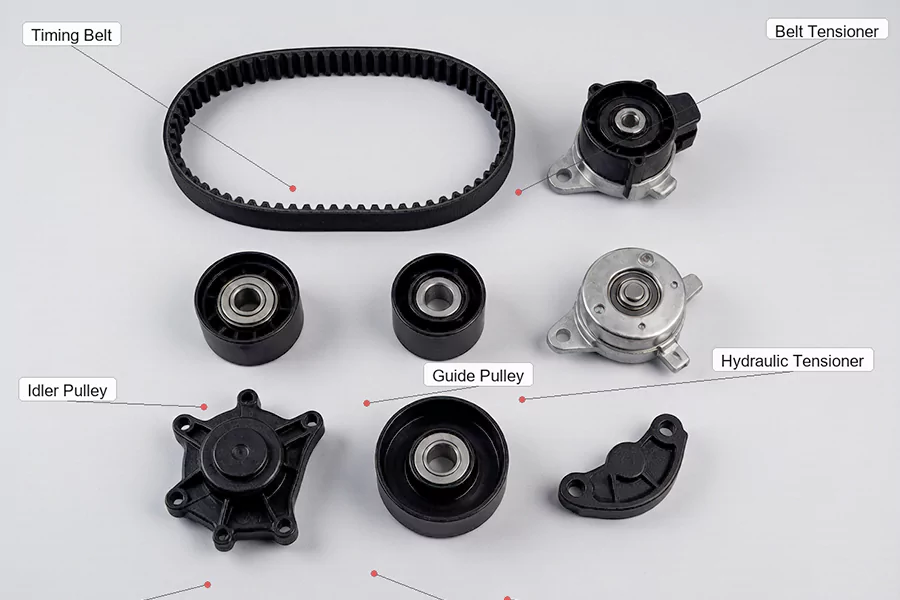
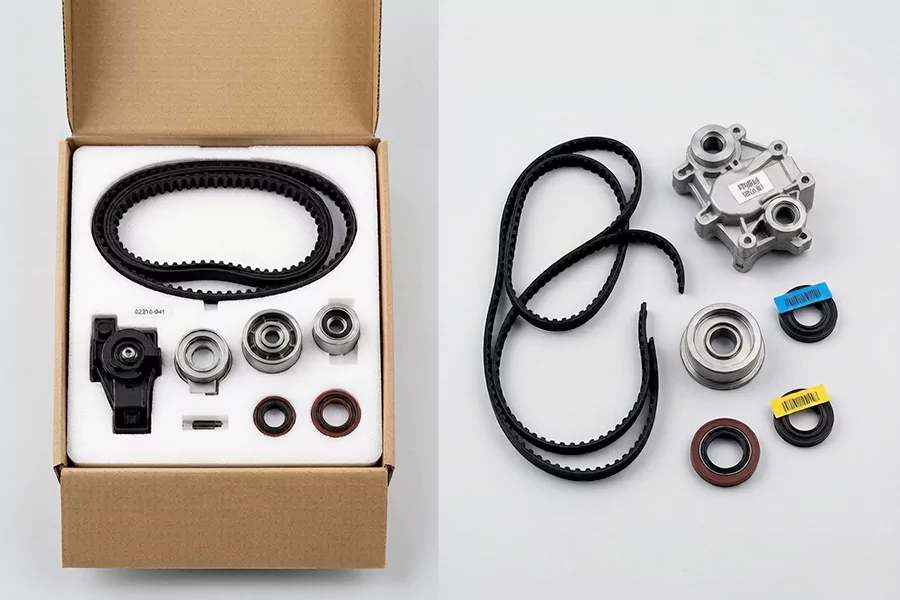
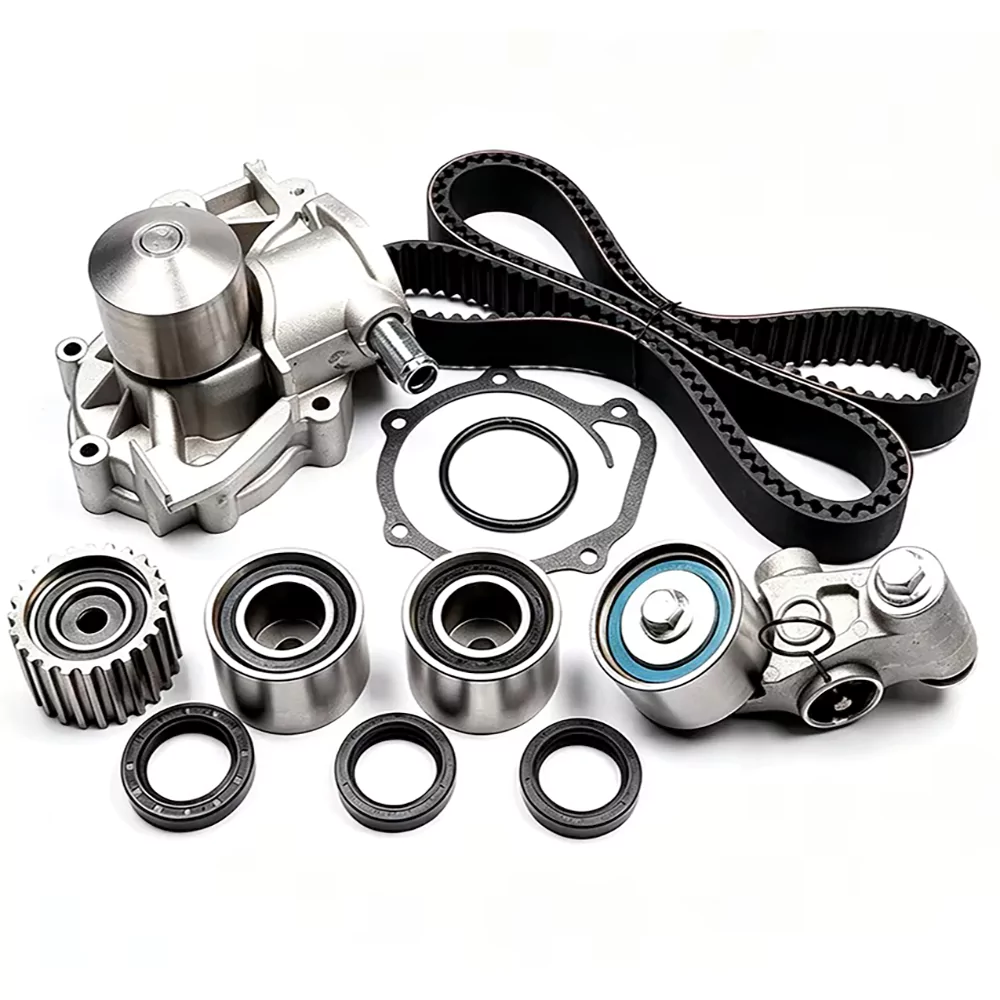
Contents vary by engine, because manufacturers build these systems differently. A typical kit, though, carries:
- the timing belt
- the water pump
- the belt tensioner
- idler and guide pulleys
- a hydraulic tensioner where the engine uses one
- mounting hardware and seals
Some applications throw in extra pieces depending on what that engine needs. For distributors this is where fitment data makes or breaks the sale — a pump kit for one engine won’t necessarily fit a sister model with a similar name.
Why these kits took over the aftermarket
The aftermarket has been moving from loose parts to full repair kits, and the belt-and-pump combo sits right in that shift.
Easier to buy. One kit instead of three separate orders for belt, tensioner, and pump. That matters when you’re managing a deep catalog.
Faster in the bay. Everything’s on the bench before the job starts, so a missing pulley doesn’t stall the repair.
Cleaner fitment. A properly cataloged kit ties every part to one engine. For suppliers shipping across borders, that cuts wrong orders and the returns that follow.
Picking a supplier
When you’re sourcing timing belt repair kits or timing belt water pump kits, price is the easy number and the wrong one to lead with. Check the rest:
- does the catalog list real compatibility by model, engine code, and OE number
- are the parts actually built to last — belt compound, pulley bearings, tensioner, pump housing
- are labels and packaging clear enough to stock without guesswork
- can they keep you supplied at the volume you sell
A supplier worth the account gives you the parts and the application data to back them.
GELWERK
Repairs keep getting more specific, and buyers want someone who gets the whole system, not a box of loose parts.
GELWERK builds aftermarket engine parts for distributors, wholesalers, and repair shops — timing components and bearings make up most of the range. They hold fitment data and check what they ship.
If you need a belt kit, a timing belt water pump kit, or other engine parts, they supply the trade rather than retail. Getting the application right is the job, and they put their effort there.