When someone comes looking for a timing belt, they rarely want just the belt. In a real repair the belt is one piece of a system that has to stay in sync or the engine doesn’t run right.
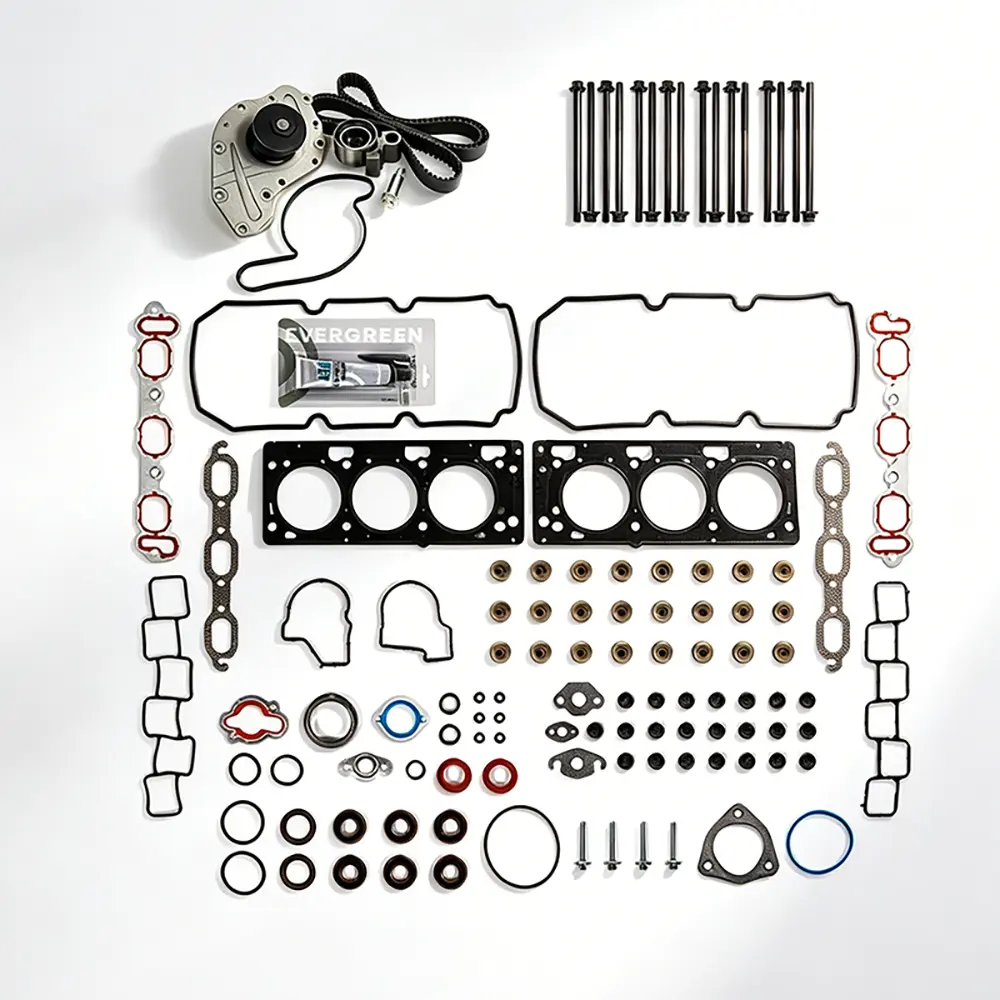
If you run a workshop, move parts by the pallet, or buy for the aftermarket, a complete timing belt repair kit is the sensible way to do the job. You replace the related parts in one shot instead of chasing them down one at a time, and the customer gets a timing system that’s actually been serviced rather than half-patched.
Know what’s in the box and you can pick the right kit, keep your inventory straight, and give the customer something that won’t come back.
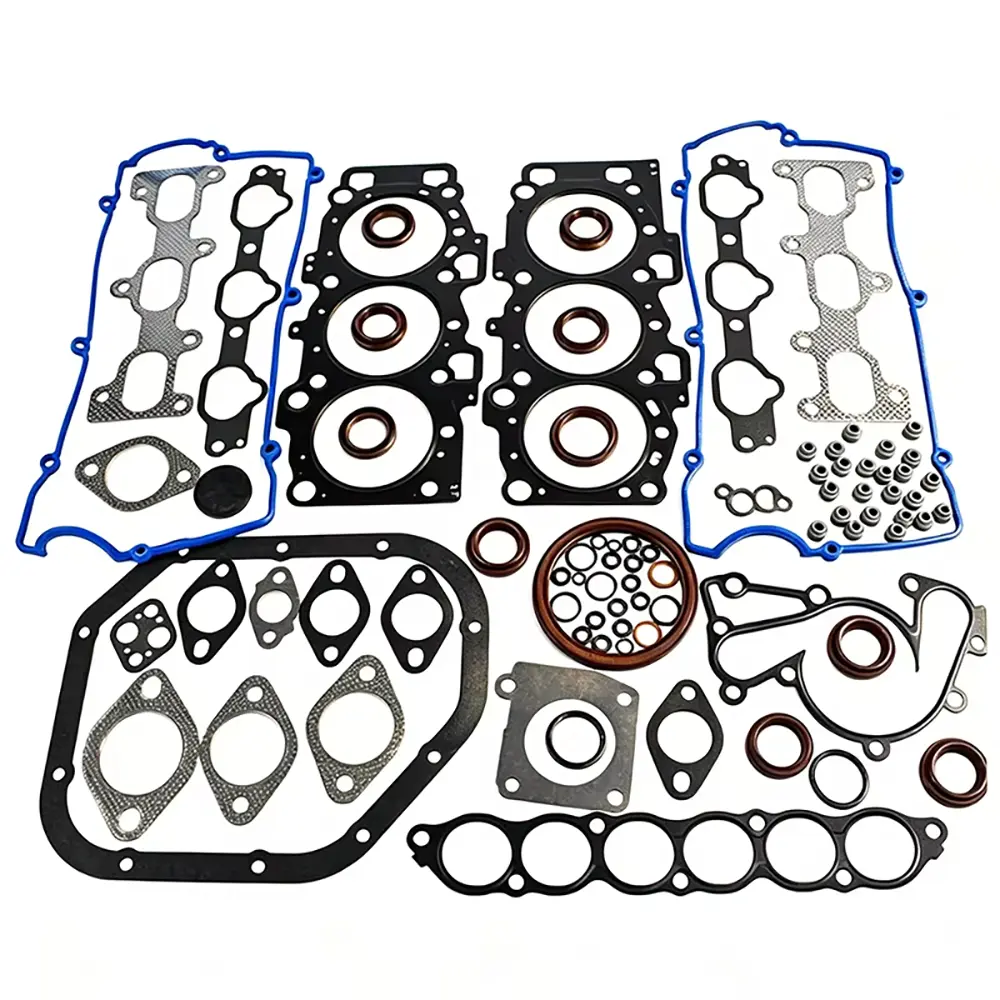
Why a complete kit matters
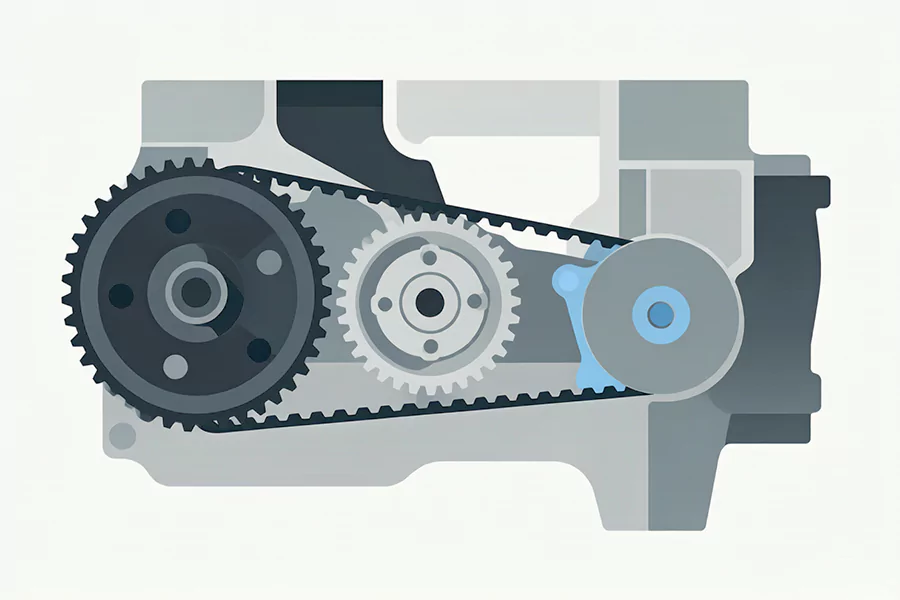
The timing system keeps the crank and cam locked together. Get the timing off by a little and you lose performance and fuel economy; get it off by enough and you bend valves. The belt does the work, but it doesn’t do it alone.
It runs against tensioners and pulleys that are spinning every time the engine turns. Same stress, same heat, same wear. That’s why most techs replace the whole system when they’re already in there, not just the belt they came for.
For the buyer it’s simpler too. One package, one part number, instead of sourcing six things from four suppliers and hoping they all show up.
What’s inside
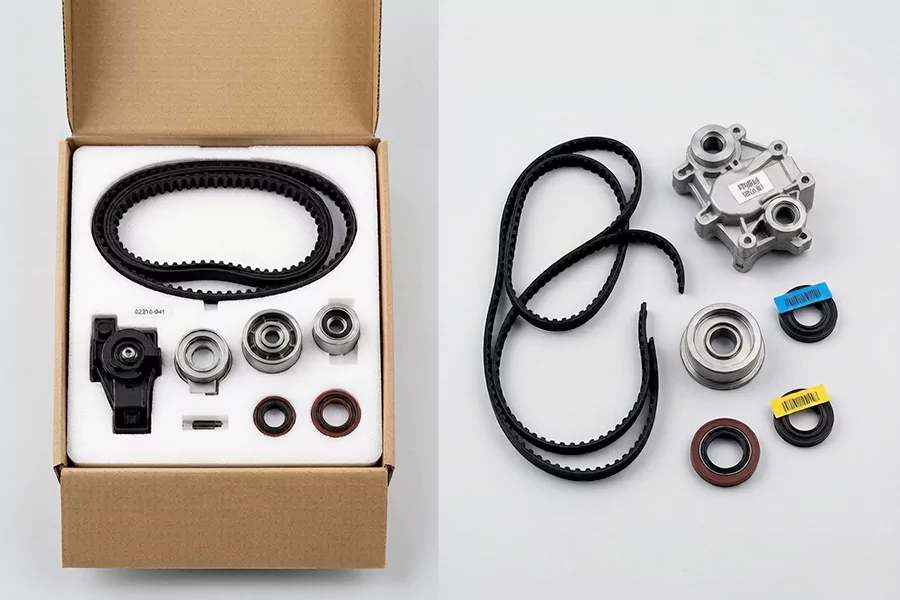
Exactly what you get depends on the engine. Manufacturers build their timing systems differently, so the contents vary by application. A typical kit, though, runs along these lines.
The timing belt
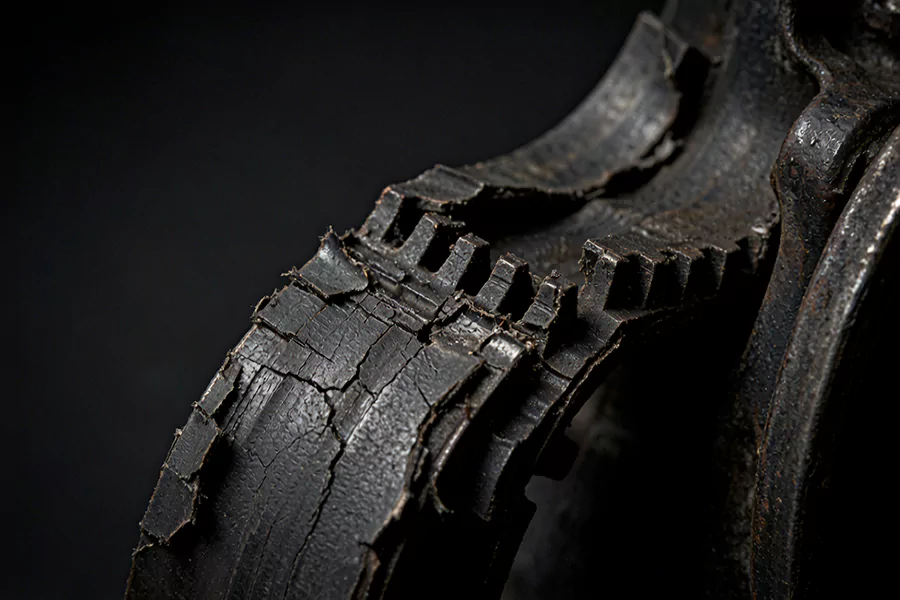
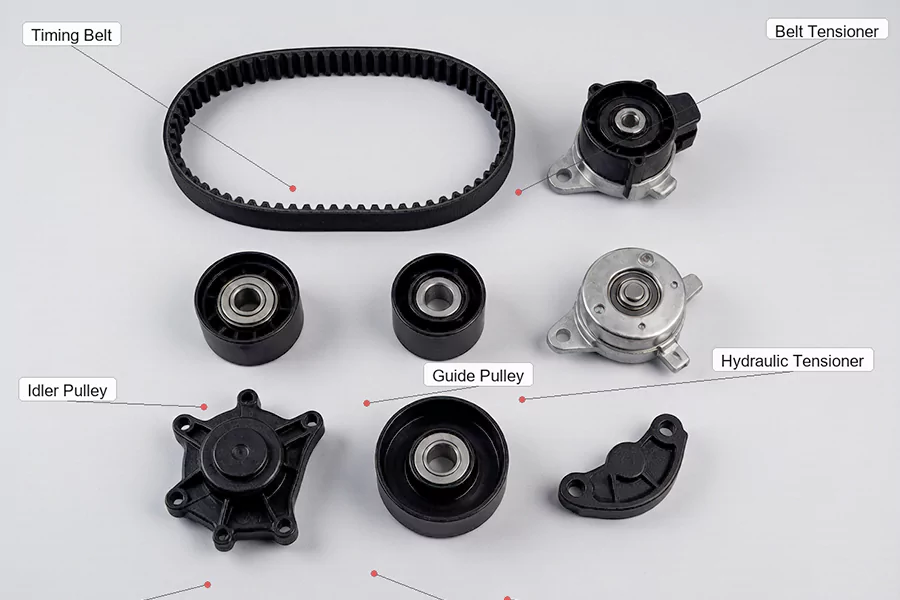
This is the part that does the driving, carrying rotation from the crank to the cam and holding valve timing where it should be. They’re built from reinforced rubber meant to take heat, constant flexing, and a long service life. Being a wear item, the belt gets a replacement interval from the manufacturer, usually pegged to mileage or age.
The tensioner
The tensioner holds the belt at the right tightness. Too loose and it slips or jumps a tooth; too tight and you’re overloading the belt and everything it touches. A tired tensioner will wreck a brand-new belt, which is why you swap it with the belt and not after.
Idler and guide pulleys
The idler guides the belt along its path and keeps it moving smoothly. The bearings in there spin the whole time the engine runs, so they wear, get noisy, and start dragging. Replace them while you’re in there and you avoid a second teardown a few months later.
Hydraulic tensioner (on some engines)
Some engines run a hydraulic tensioner instead of a spring-loaded one, using oil pressure to hold tension steady. These are engine-specific, so fitment has to be exact when you’re picking the kit.
Water pump
On a lot of engines the water pump runs off the timing belt. Change the pump while you’re in there and you skip a second job on the same front cover. A pump that lets go later means coolant everywhere, overheating, and a comeback you could have avoided. That’s why so many kits are sold as belt-and-pump combinations.
Complete kit vs loose parts
You can buy the pieces separately, and sometimes a specific repair calls for it. But for the usual job, a full kit wins on a few fronts.
Fitment stays matched. The belt, tensioner, and pulleys in a kit are chosen for one engine, not grabbed off three different shelves.
Less risk on the lift. Leave one old part in and it’s the next thing to fail. The kit closes that gap.
Easier to stock. Wholesalers and distributors don’t want to track thousands of loose timing parts. Kits are one line on the shelf instead of ten.
Faster for the shop. The bay gets everything in one box and finishes the job without waiting on a back-ordered pulley.
Picking a supplier
Buying in volume, quality is only part of the equation. Fitment accuracy and whether the supplier can actually deliver matter just as much. Before you commit, check:
- does their catalog cover the engines you sell
- are the OE cross-reference numbers right
- is the catalog data itself accurate
- what’s their quality control, if any
- packaging and labeling that survives the trip
- can they keep you supplied at the volume you need
A supplier that can’t give you solid application data isn’t worth the discount. For an international aftermarket business a wrong fitment number turns into a return, a complaint, and a freight bill you didn’t need.
GELWERK and what they make
A timing belt kit isn’t just parts in a box. Every piece has to match the engine and work with the rest, or the kit is worthless. That’s the whole point.
GELWERK builds aftermarket engine parts for distributors, wholesalers, and repair shops, with timing components and bearings making up most of the catalog. They hold fitment data and run checks on what they ship.
If you need a belt kit, a full repair kit, or other engine parts, they’re set up to supply the trade rather than retail. For a parts partner, getting the application right is the job, and that’s where they put their effort.